Megan Whelen
2018–23

Akili

The first FDA-authorized video game treatment, for ADHD. I designed the apps that show families it's working.

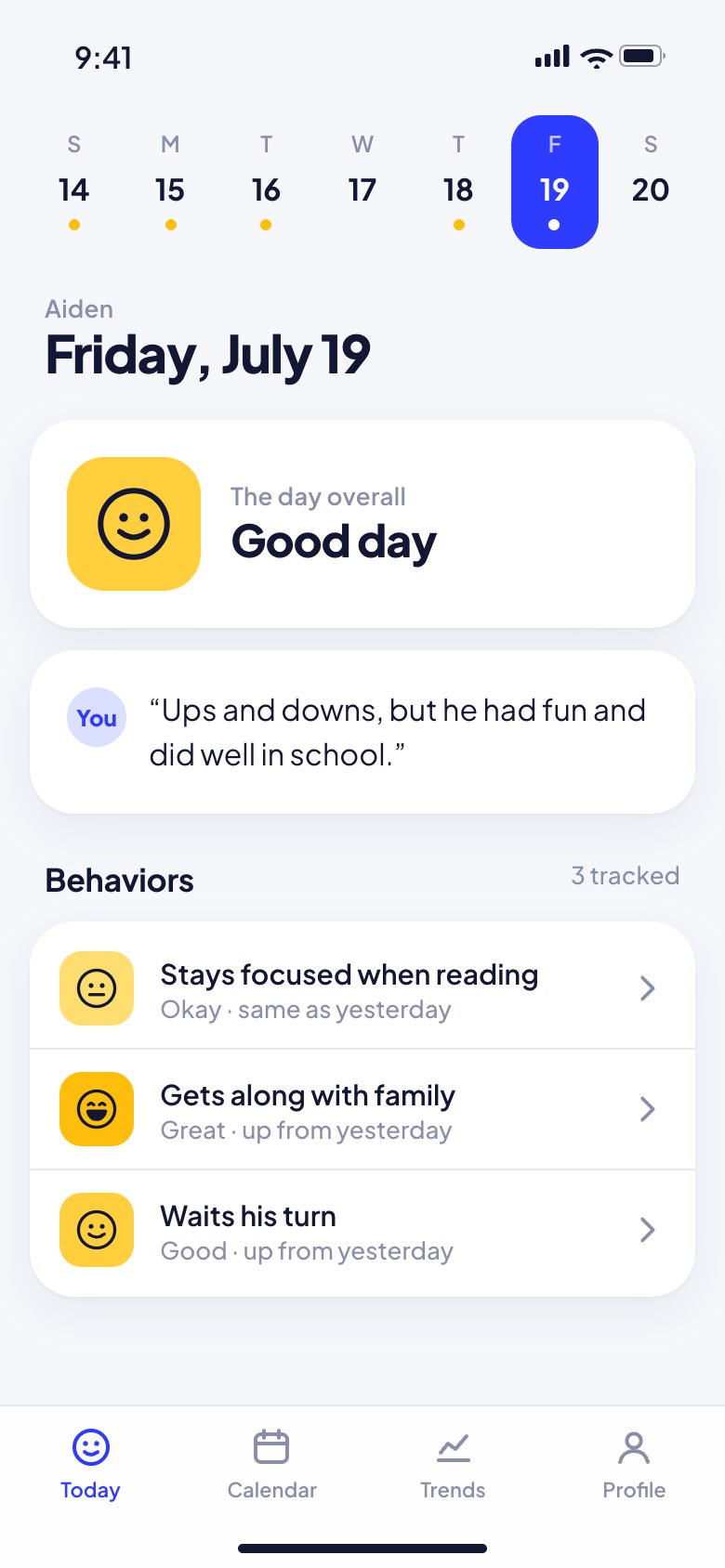
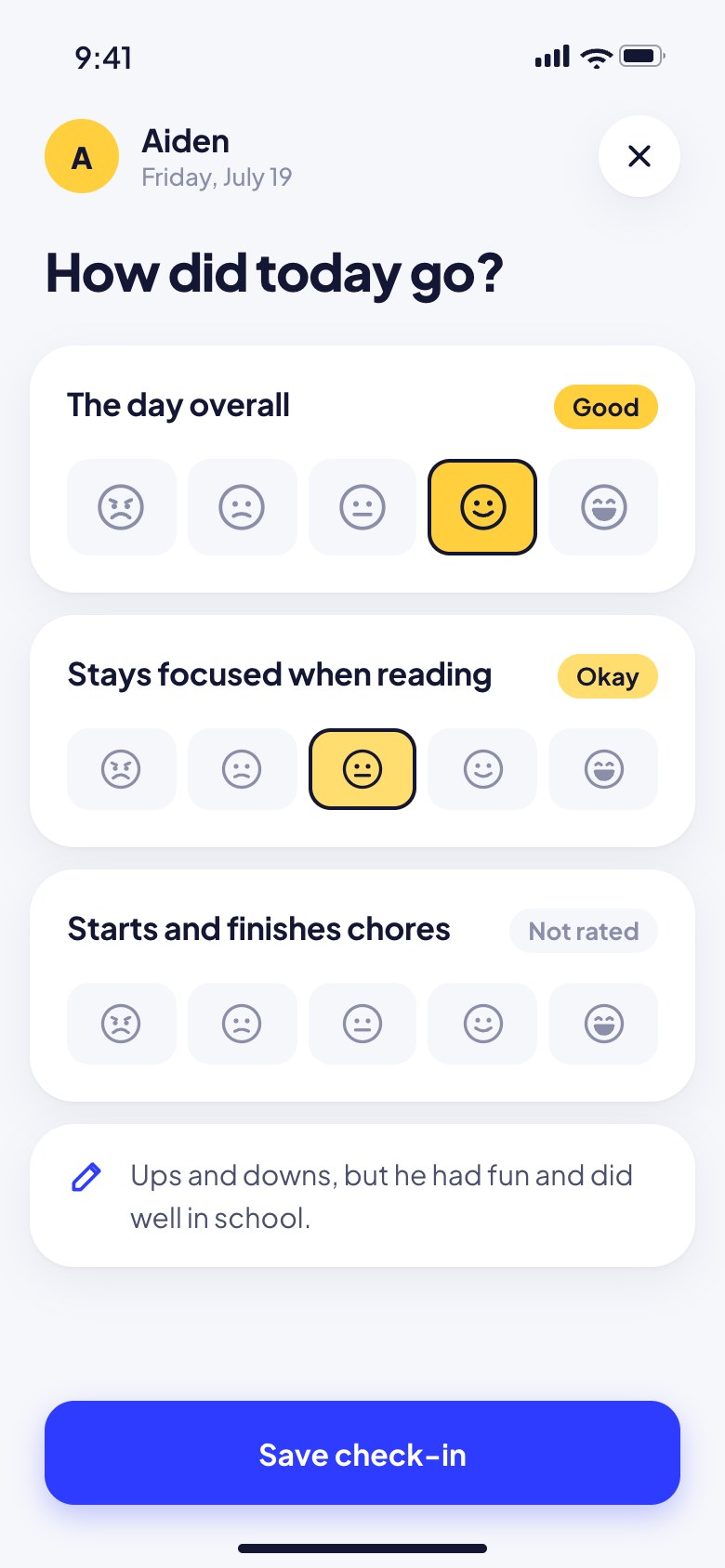
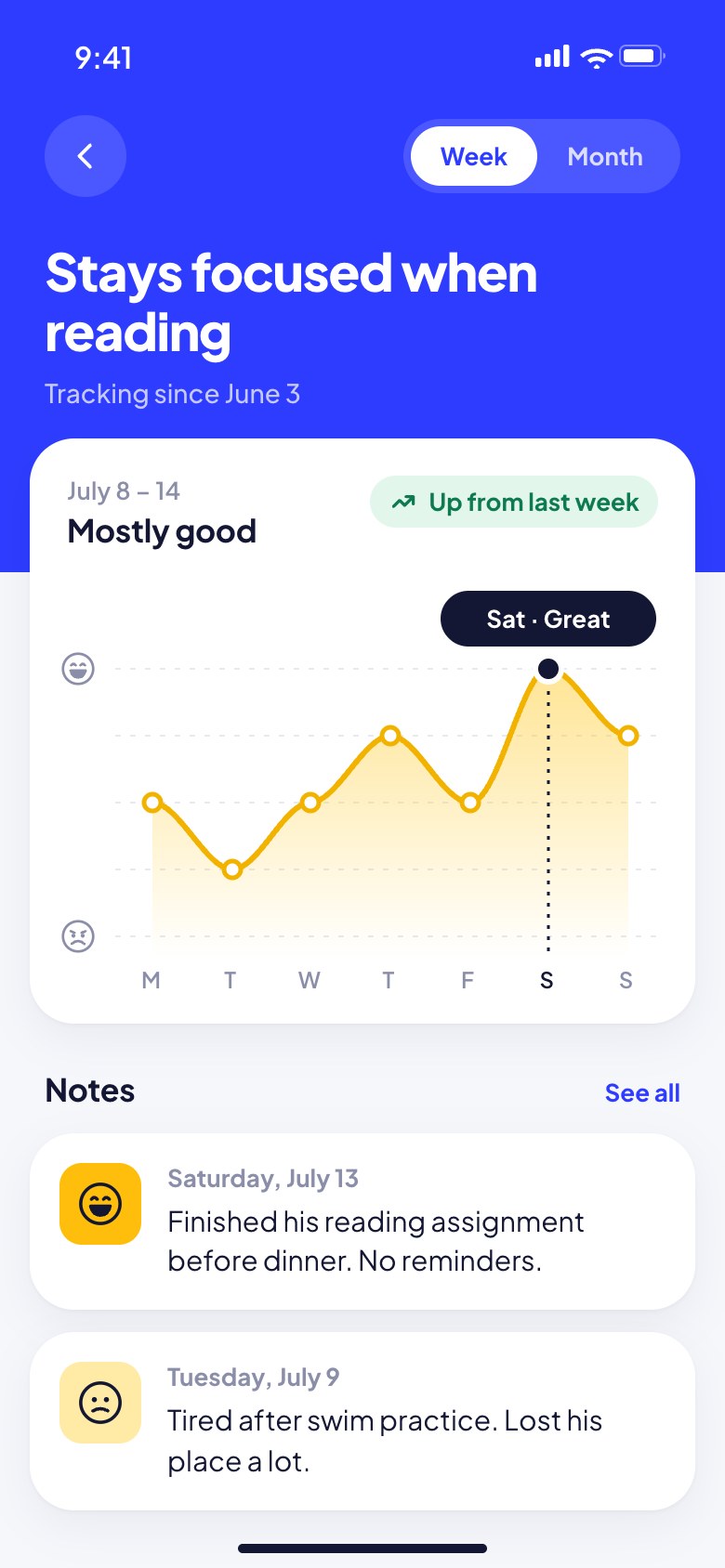
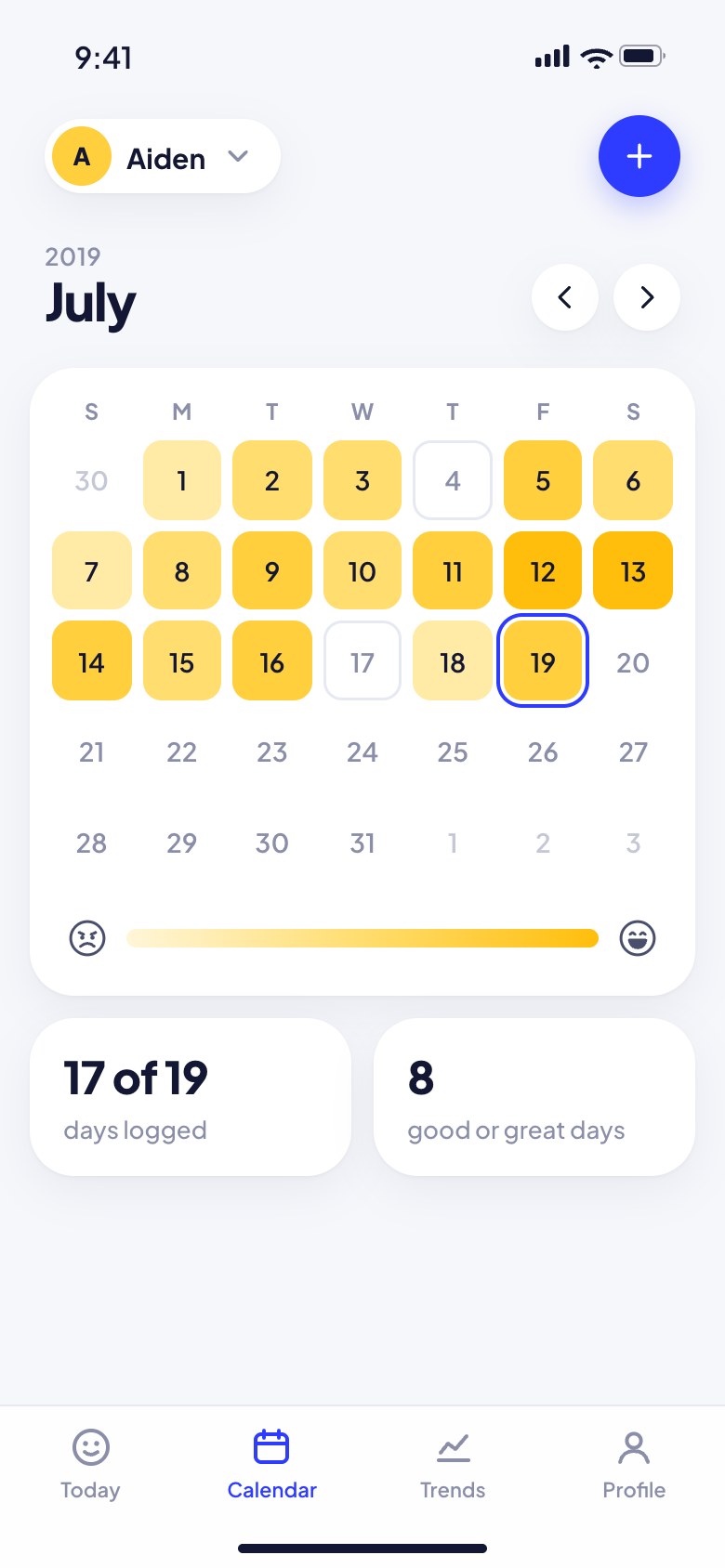
ADHD Insight daily check-in: rate the day and each behavior on a five-face scaleBehavior trend: a week of ratings for staying focused when reading, with parent notesMonth calendar shaded by how each day went

The problem

Families and adult patients had no easy way to see whether the treatment was helping.

What I did

Designed companion apps that show progress using data the game already collects, and a Focus Score for adults.

Result

+25%

treatment adherence once adults could see their Focus Score.

01

Daily logging didn't last.

Our first app, ADHD Insight, asked parents to log symptoms every day. It tested well.

At home it was like keeping a food journal: good in theory, hard to keep up when life gets busy.
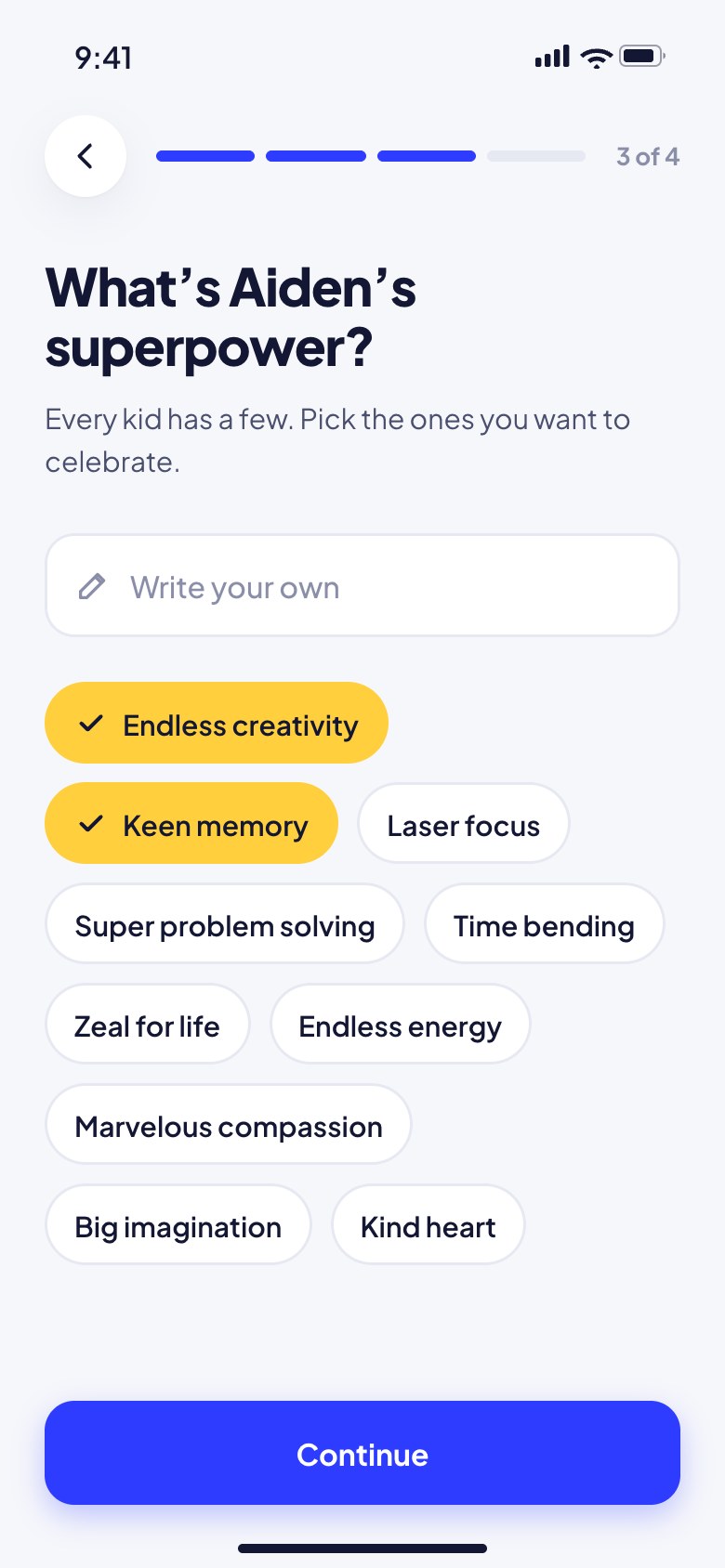
Set-up: choosing the child's superpowers to celebrateDay view: overall rating, parent note and each tracked behavior
ADHD Insight, rebuilt in 2026 from my original 2019 designs.

02

Use data we already had.

Kids were already playing the game, so EndeavorRx Insight showed parents how often and how hard their child played. No logging needed.

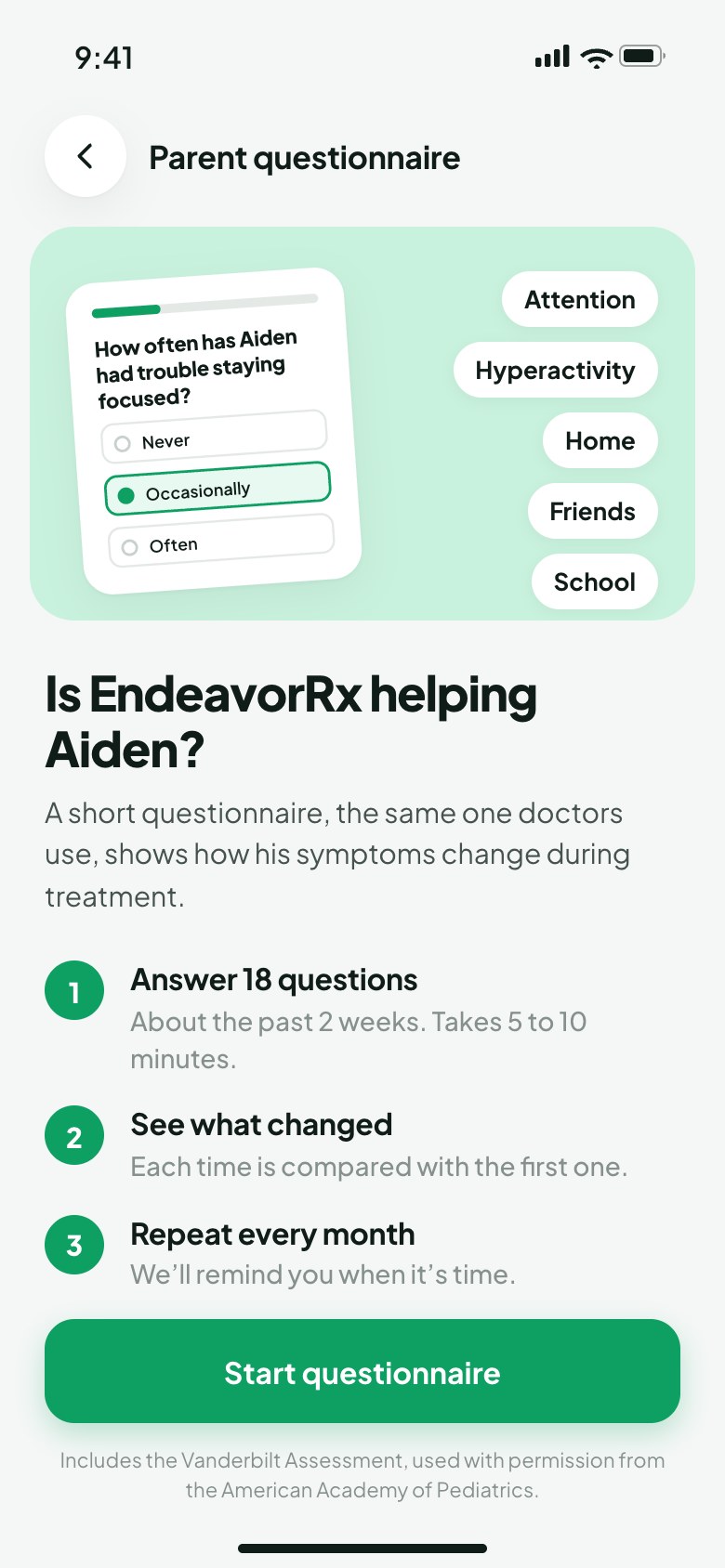
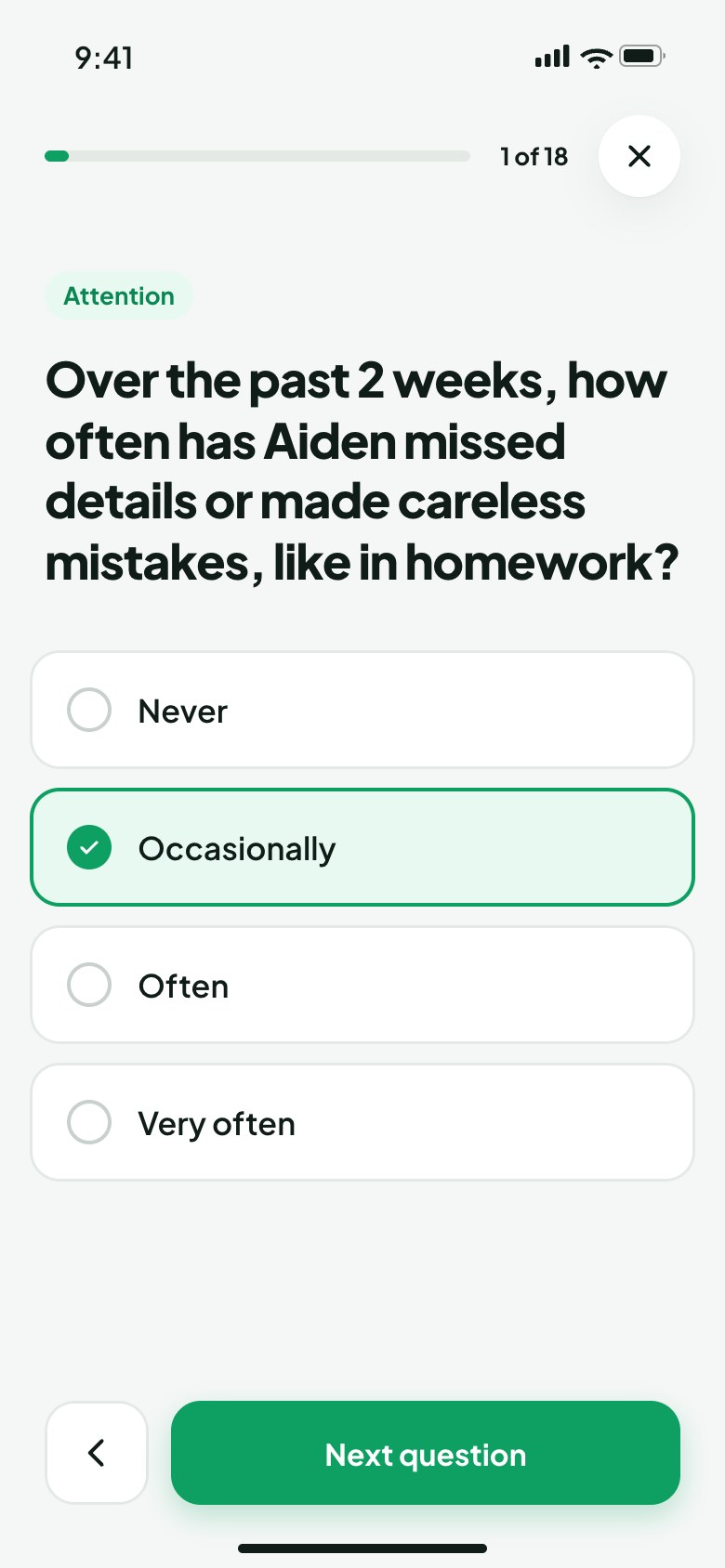
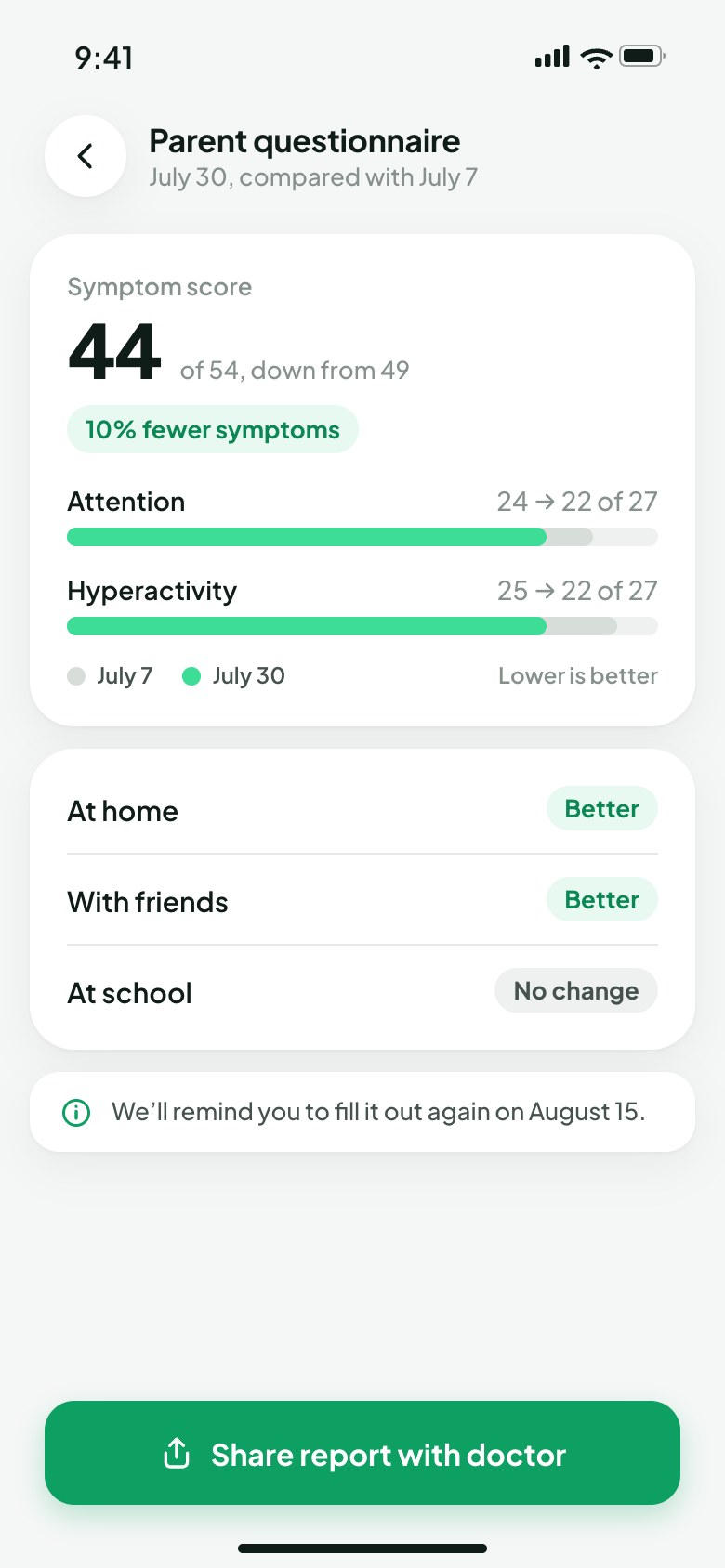
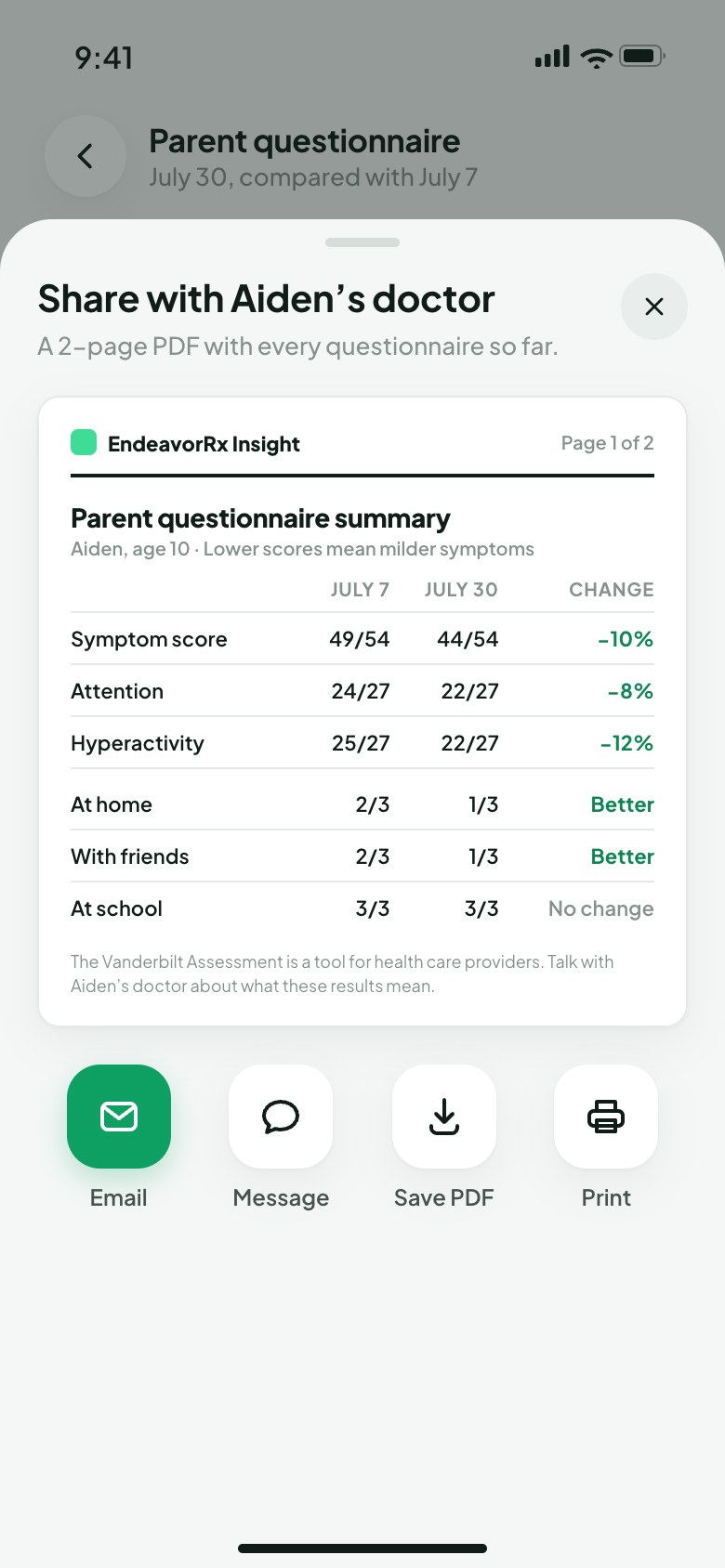
A short parent questionnaire then turned symptom changes into a report families could share with their doctor.
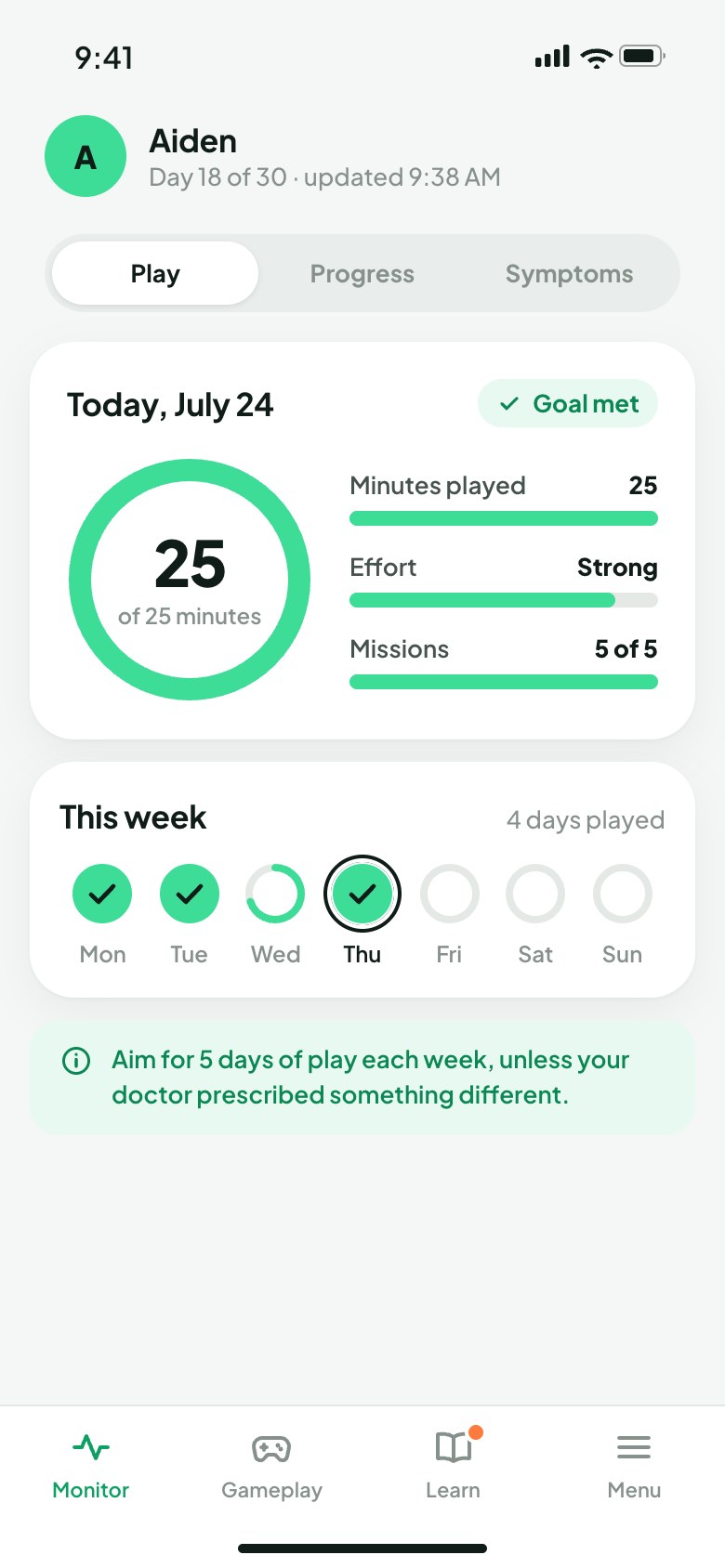
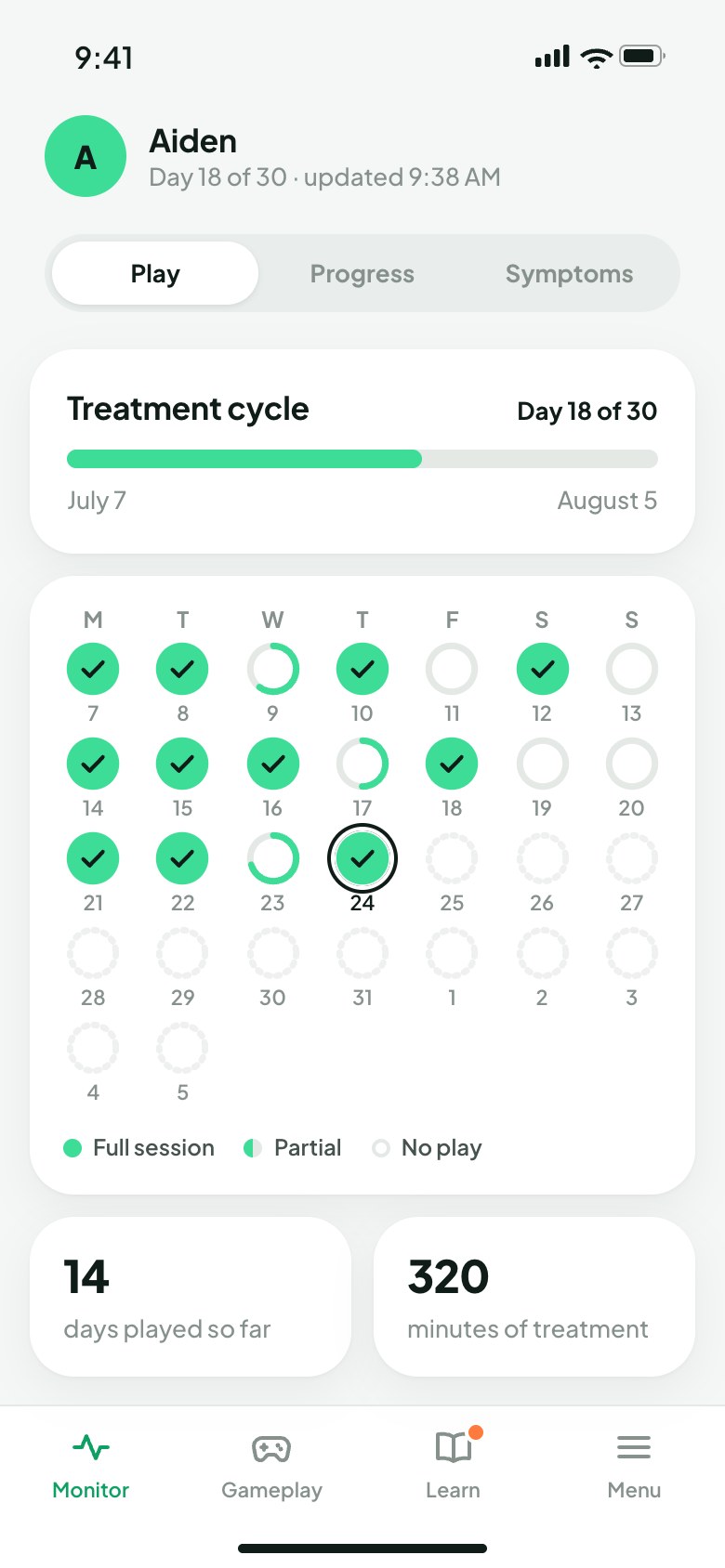
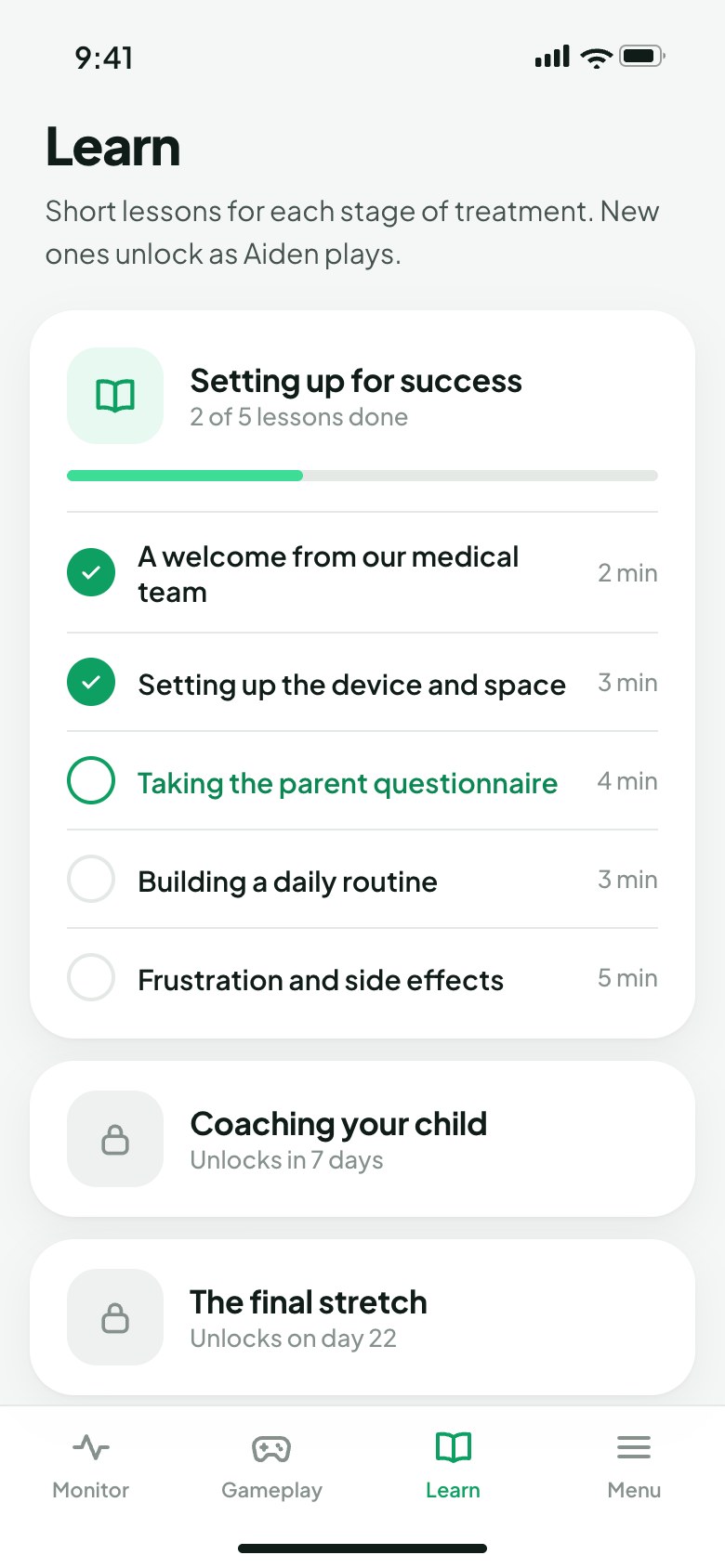
EndeavorRx Insight: today's minutes, effort and missions, with the week so farThe 30-day treatment cycle, one ring per day of playShort lessons for parents that unlock as treatment goes on
EndeavorRx Insight: daily play, the treatment cycle and lessons. Rebuilt in 2026 from my original designs.
Questionnaire intro: 18 questions, see what changed, repeat monthlyQuestionnaire: one question per screen, four answersResults compared with the first questionnaireA PDF report to email, message, save or print for the child's doctor
The parent questionnaire: start, answer, see what changed, share with the doctor. Rebuilt in 2026.

03

A score adults asked for.

When the adult version launched, 70% of users asked for a way to track their progress.

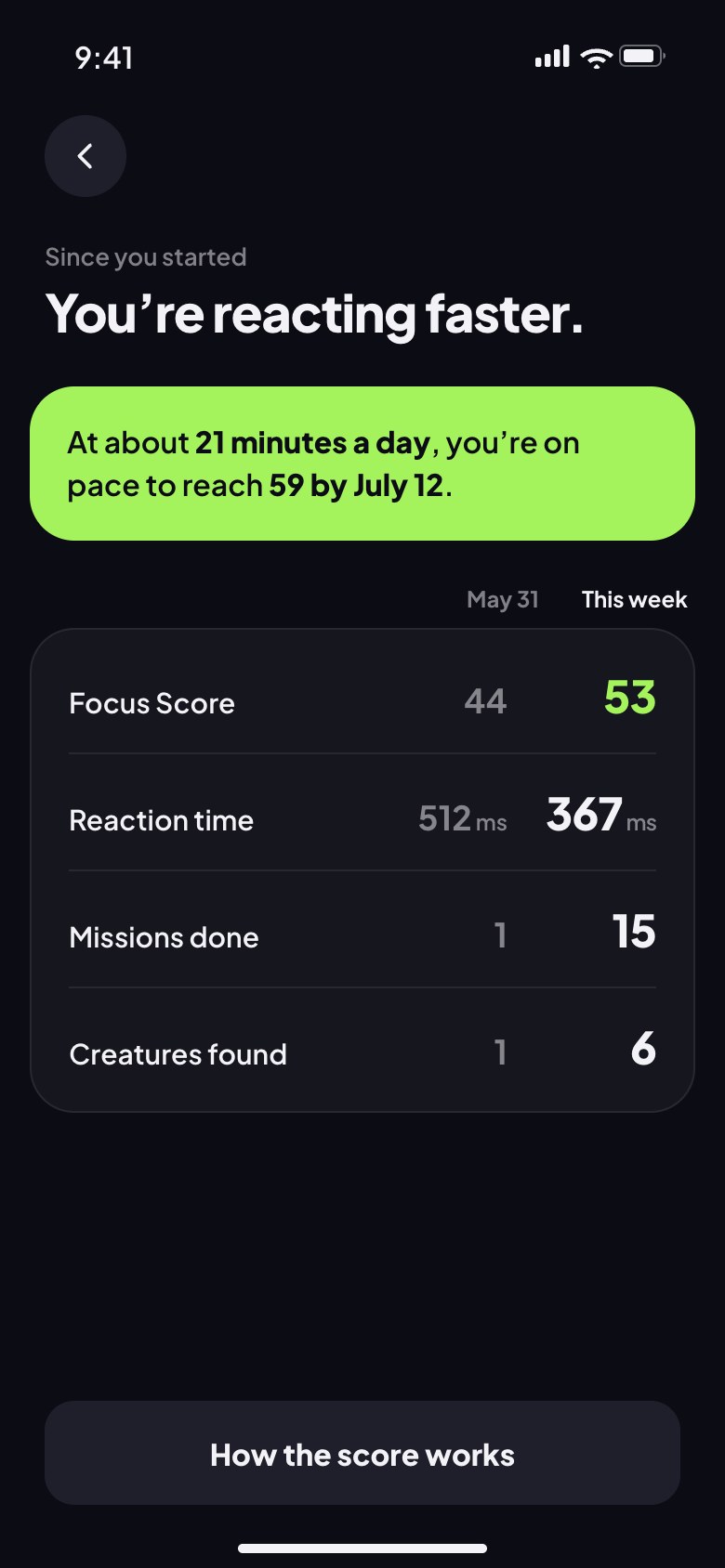
With our data science team, I designed the Focus Score. It shows how your focus compares with other players, with a next goal that always feels reachable.
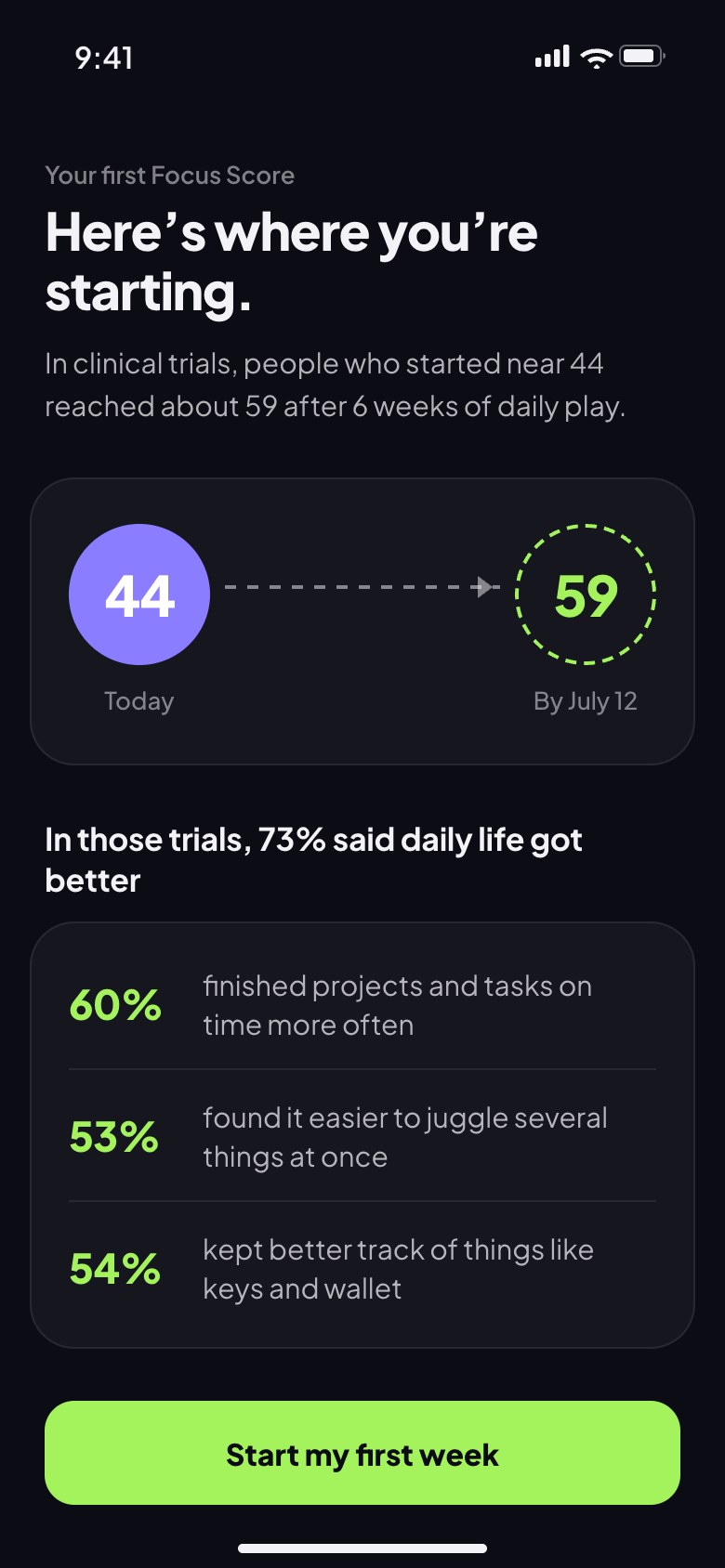
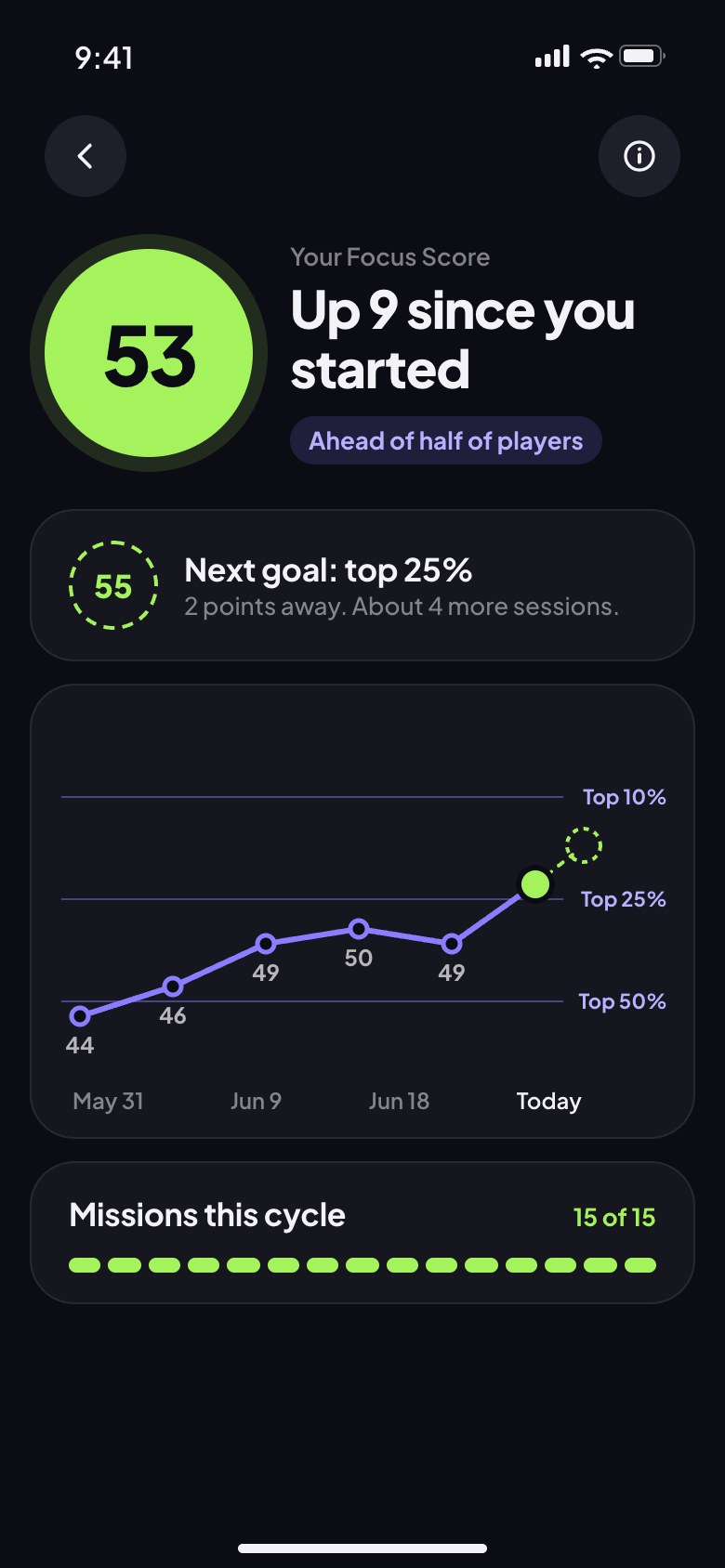
First Focus Score: a starting point of 44 and a projected 59 after 6 weeksFocus Score of 53 with the next goal 2 points away, charted against player tiersSince you started: score, reaction time, missions and creatures
Focus Score: where you start, where you are, what changed. Rebuilt in 2026 from my original designs.

The numbers

+25%treatment adherence with the Focus Score
+40%longer play for adults tracking their score
95%of parents finished all 18 questionnaire questions
~10%higher retention in weeks 3 to 4 after the questionnaire launched
4.4App Store rating, from 177 ratings

What didn't work

Only 4% shared results with their doctor.

We built a way to send results to doctors, and almost nobody used it. Research into why was underway when I left.

Families who used the app also stayed on treatment far more (72% vs 20%). It's tempting to take credit, but engaged families may simply be more engaged to begin with.